Illustration of a SaaS platform with connected business modules.
Case study

Redesigning a Billing System for a B2B SaaS Company in a Regulated Industry

Key Highlights

Billing System Redesign

Step-by-Step Wizards

Error & Exception Handling

Navigation Redesign


Overview

Note: This case study has been anonymized to protect confidential business information. Company-specific terminology, visuals, and product details have been generalized while preserving the design process and outcomes.

A Nordic SaaS company operating in a regulated industry was modernizing its legacy desktop application into a scalable web platform. As the Product Designer, I was responsible for the platform's overall UI design and the redesign of several business-critical workflows, including information architecture, navigation, guided experiences, and functional design.

This case study highlights a selection of design initiatives from a much broader product redesign. The examples focus on information architecture, navigation, and billing workflows, as these best demonstrate my approach to simplifying complex enterprise systems through product thinking, workflow design, and user-centered decision-making.


Key Contributions

My Role

Product Designer
Product Management
‍Responsible for Overall UI Design
Business-Critical Workflows
Research

Focus Areas

Product Design
Information Architecture
Workflow Design
Navigation Design
UX & UI Design

Collaboration

Product Owner
System Architect
Engineering
Customers
Business Stakeholders


The Product

The platform supported complex operational workflows for organizations operating in a regulated environment. It served multiple user groups with different roles and permission levels, requiring tailored experiences across administration, daily operations, and business-critical workflows. Administrators configured services, managed users and permissions, maintained pricing models, and processed billing through external integrations.

The Design Challenges

The Challenge
Design Goal

Inconsistent Experience

Years of incremental updates created an inconsistent look, feel, and interaction pattern.

Create Consistency

Establish a cohesive design system and consistent interaction patterns.

Steep Learning Curve

Users required extensive training and user manuals to perform even basic tasks.

Create Intuitive Experiences

Design self-explanatory flows and interfaces that reduce the need for training.

User Errors & Exceptions

Users often made mistakes, leading to errors and time-consuming corrections.

Prevent Errors

Design for validation, error prevention, and provide clear guidance when issues occur.

Complex Navigation

Important features were difficult to find, causing inefficiency and frustration.

Simplify Navigation

Improve information architecture and make key features easy to discover.

Complex Workflows

Many tasks required understanding complex business rules before they could be completed.

Guide Users Step by Step

Break complex processes into clear, step-by-step workflows with progressive disclosure.

After Research: Fast AI-Assisted Prototyping

01

Design System

Built a reusable design system in Claude Designer.

02

AI Prototyping

Rapidly explored ideas and created interactive prototypes with Claude.

03

Customer Feedback

Shared prototypes with customers and collected feedback.

04

Iterations

Refined workflows and UI based on feedback and new insights.

05

Approvals

Approved by customers, developers and solution architect.

06

Figma

Final UI designs and components in Figma.

Information Architecture & Navigation

challenge
Navigation reflected technical modules rather than the way users actually worked, making important functionality difficult to find. Users often relied on documentation, prior experience, or customer support to complete everyday tasks.

As the platform evolved over many years, new features were added incrementally without a consistent information architecture.
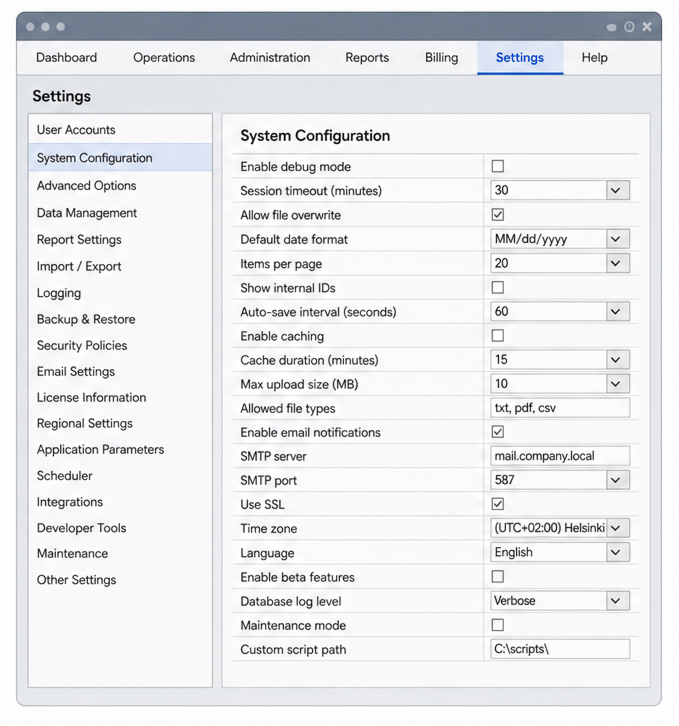
Before
After
Legacy user interface with the original navigation layout.
Redesigned user interface with improved navigation
solution
Together with the System Architect, I redesigned the platform's information architecture by organizing functionality around user workflows instead of technical components.

Key Design Principles:

Organize the platform around user workflows instead of technical modules.

Group related functionality into logical categories.

Reduce unnecessary navigation decisions.

Improve discoverability through a clearer information hierarchy.

Create a scalable structure that supports future product growth.
User goals

Understand user needs
Identify key user groups
Define business goals

Daily tasks

Analyze user workflows
Identify pain points
Prioritize key actions

Logical groups

Group related features
Simplify navigation
Create logical categories

System architecture

Align business processes
Define scalable structure
Collaborate with the System Architect

Navigation structure

Design intuitive navigation
Improve discoverability
Support future scalability

This new information architecture became the foundation for many of the workflow improvements implemented later in the project.

Workflow Wizards

Context
Many of the platform's business-critical workflows had become increasingly complex over time. Tasks such as platform setup, billing, service configuration, and pricing management required users to understand complex business rules, move between multiple views, and rely heavily on documentation and customer support.

The challenge wasn't the complexity of the business itself, it was how that complexity was presented to users.

Solution
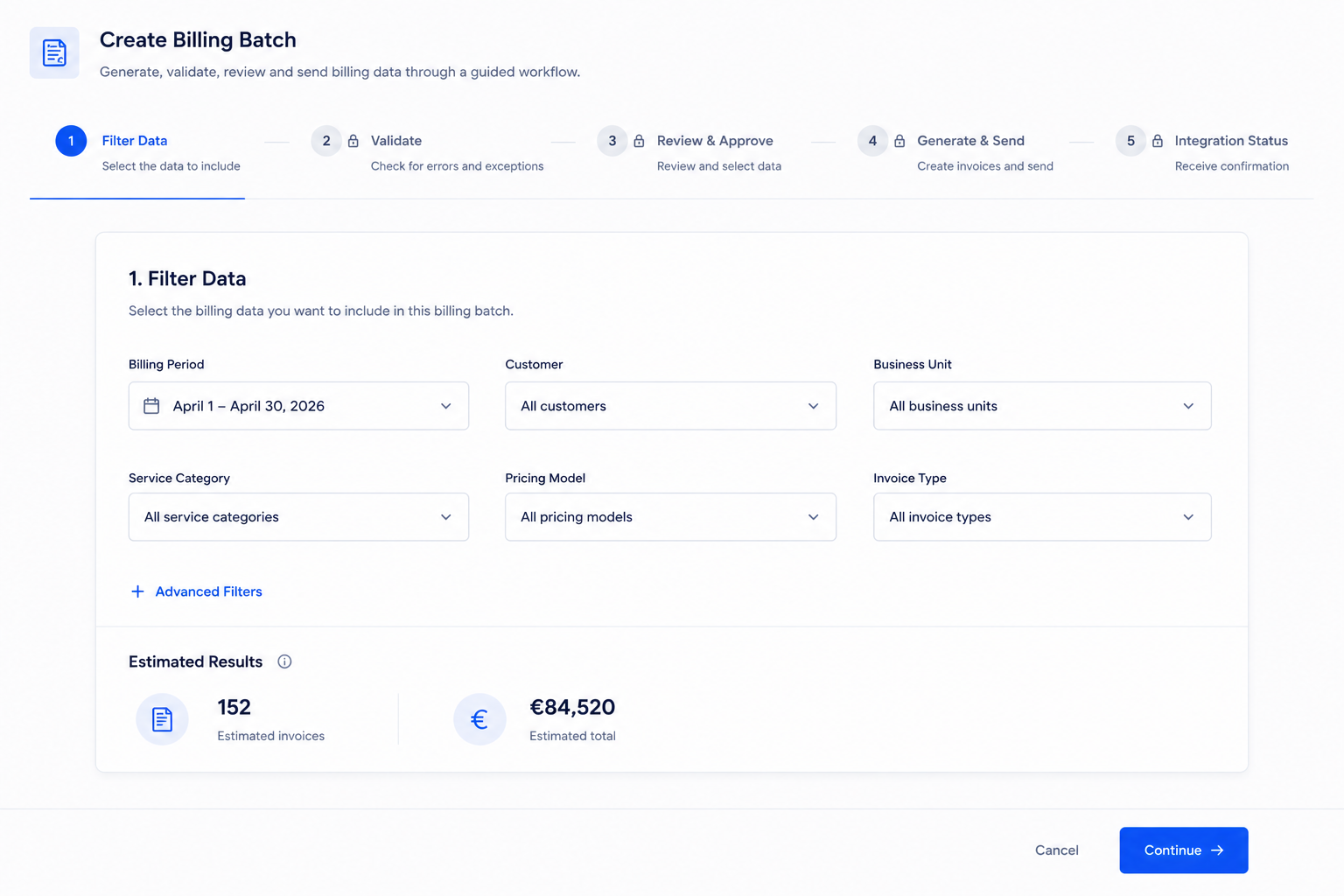
Rather than exposing every option at once, I redesigned complex workflows into guided, step-by-step experiences using reusable wizard patterns. Each workflow was structured around a clear sequence of decisions, allowing users to focus on one task at a time. Validation, review steps, and contextual guidance were integrated directly into the process, reducing cognitive load while making complex tasks easier to understand and complete.

The same interaction patterns were reused across multiple workflows, creating a more consistent user experience throughout the platform and establishing a scalable foundation for future product development.

Step-by-step wizard for creating a billing patch.

The wizards were designed to reduce cognitive load, guide users through complex processes, and help prevent mistakes. The same design approach was applied across other complex workflows to create a more consistent user experience and reduce user errors throughout the platform.

Designing for Error Prevention

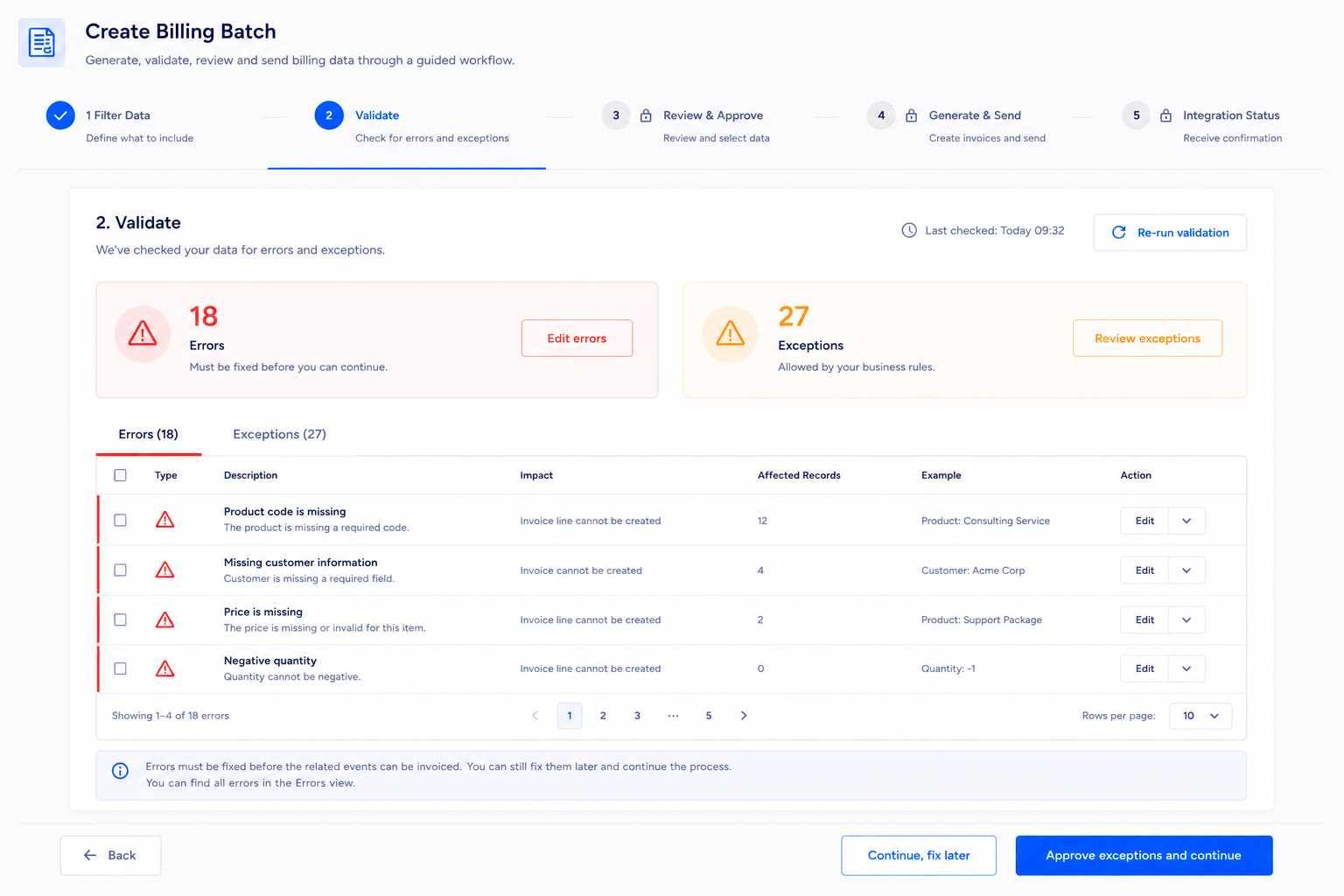
One of the biggest challenges was ensuring billing data was accurate before invoices were generated. Users often discovered issues too late, resulting in failed invoices and manual corrections.

The solution was to integrate validation directly into the billing workflow and separate two distinct issue types, Errors (blocking issues that must be fixed) and Exceptions (business-rule variations that can be reviewed and approved). This gave users clarity and reduced unnecessary interruptions.

Validation step displaying errors and exceptions.

The validation workflow was designed to help users identify issues before invoice generation, separate blocking errors from business-rule exceptions, and support more informed decision-making throughout the billing process.

Results

Customers felt heard

Involving the five largest customers in interviews and prototype reviews created a collaborative dynamic. Customers reported feeling like genuine partners in shaping the product, not passive end users.

Complex processes became approachable

Guided step-by-step wizard flows received consistently positive feedback. Users who previously relied on documentation to complete routine tasks were able to navigate the same processes with greater confidence.

Reduced dependency on manuals

Wizard flows and contextual info buttons embedded guidance directly into the product. The system itself became the support layer — reducing the need for lengthy manuals and decreasing support requests.

Automated error handling reduced business risk

Building validation and exception tracking directly into billing workflows gave businesses real-time visibility into billing accuracy - reducing revenue loss caused by undetected errors accumulating over time.

Clearer requirements, faster development

Translating complex business logic into precise functional requirements reduced back-and-forth between design and development. Developers had clear, documented specs to work from minimising ambiguity and accelerating implementation.

A scalable foundation for future development

Reusable wizard patterns, consistent interaction flows, and a restructured information architecture created a foundation that new features could be built on, without rethinking the product from scratch each time.


Reflection

The most valuable insight from this project was discovering how much of product design happens before any interface is drawn.

Designing for example a complex billing system meant holding an entire ecosystem in mind simultaneously understanding how data structures connected, how a single configuration decision could cascade across workflows, and how edge cases in billing logic could quietly affect revenue if left unhandled. This kind of systems thinking turned out to be as important as any UX skill.

What made it especially challenging and rewarding was that every technical and business decision ultimately had to be translated into an experience that felt simple and guided for end users, many of whom came from very different backgrounds and organisations of all sizes. The complexity had to disappear at the interface level, even when it absolutely could not disappear from the logic underneath.
"Working on this project fundamentally changed how I think about product design. I realized that great user experiences aren't created by beautiful interfaces alone. They emerge from understanding the relationships between people, business goals, technology, and complex systems." - Marisa Kouhia
Social- and healthcare industry

Designing for Regulated Industries

Healthcare Digital Services

Healthcare Domain Expertise

Experience designing digital solutions for Finnish healthcare and social services, with deep understanding of regulated workflows and public sector requirements.
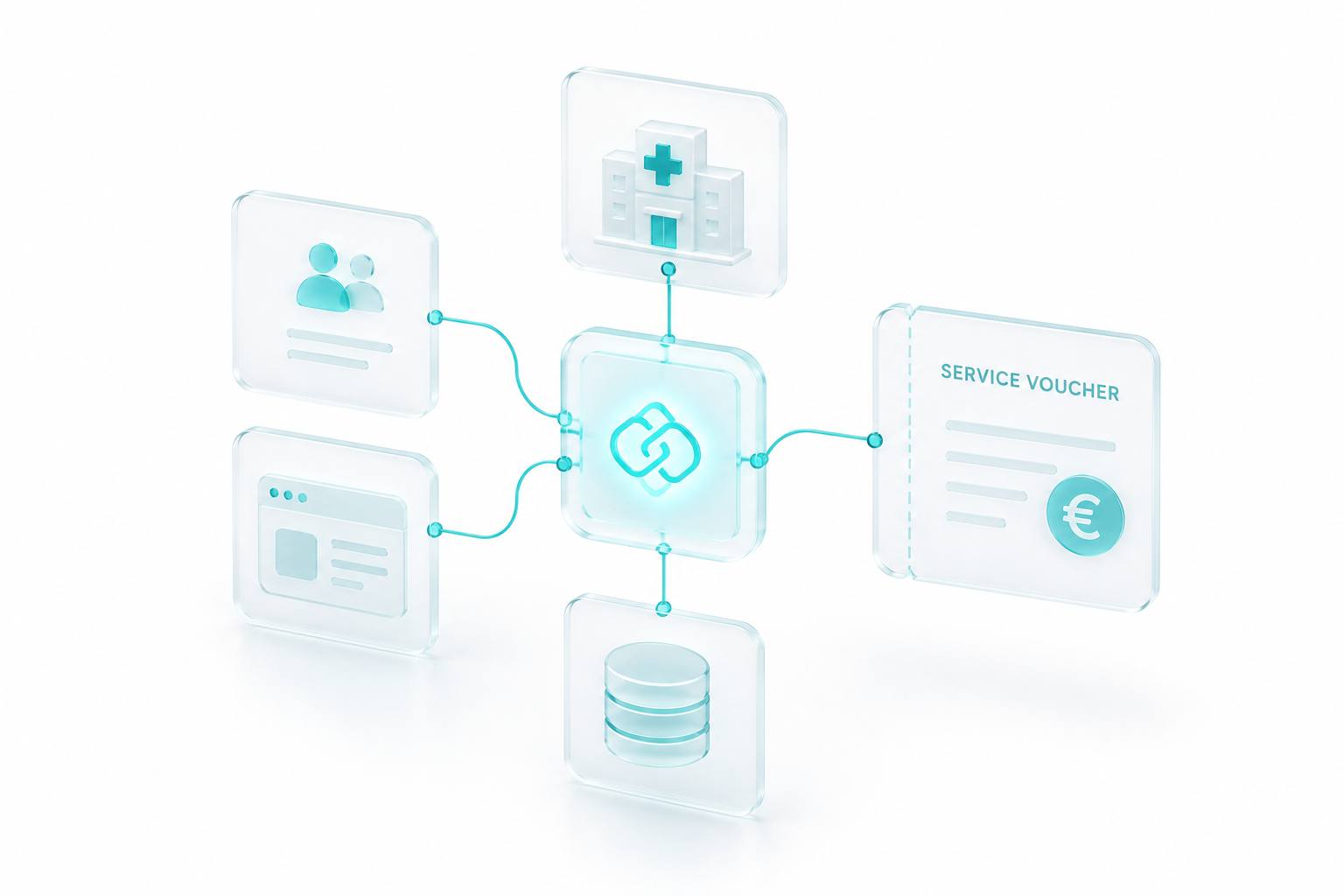
Concept illustration of system integrations.

Service Vouchers & System Integrations

Experience with healthcare system integrations, including the Finnish service voucher platforms PSOP and Palse, as well as financial systems such as Netvisor, Fennoa, Fivaldi, Microsoft Dynamics NAV and Dynamics 365.
Illustration representing quality assurance.

Quality Assurance

Testing digital healthcare solutions, validating new features and ensuring functionality meets business and user requirements.
Illustration representing privacy and GDPR awareness.

Accessibility (WCAG 2.2 AA)

Knowledge of WCAG 2.2 AA accessibility guidelines and experience applying accessible design principles to create inclusive, user-centered digital services.
Illustration representing privacy and GDPR awareness.

Privacy & GDPR Awareness

Applying GDPR principles and privacy-by-design practices when designing secure digital healthcare services.
Illustration representing agile product development.

Agile Product Development

Collaborating with developers, designers and stakeholders throughout agile product development to deliver user-centered digital solutions.

Ai as a tool

AI & Automations

Business Process Automation

Reduce manual work and eliminate bottlenecks by automating key business processes. From sales and marketing to customer support and internal operations, automation helps teams focus on higher-value work.

AI as a Design Tool

AI is a powerful accelerator for research, ideation, and prototyping. It helps move from concept to validation faster, while human expertise ensures the final solution remains useful, intuitive, and aligned with business goals.

Design Systems

Modern design systems provide a foundation for AI-assisted product development. Structured components and design principles help tools like Claude generate brand-aligned prototypes faster and more consistently.
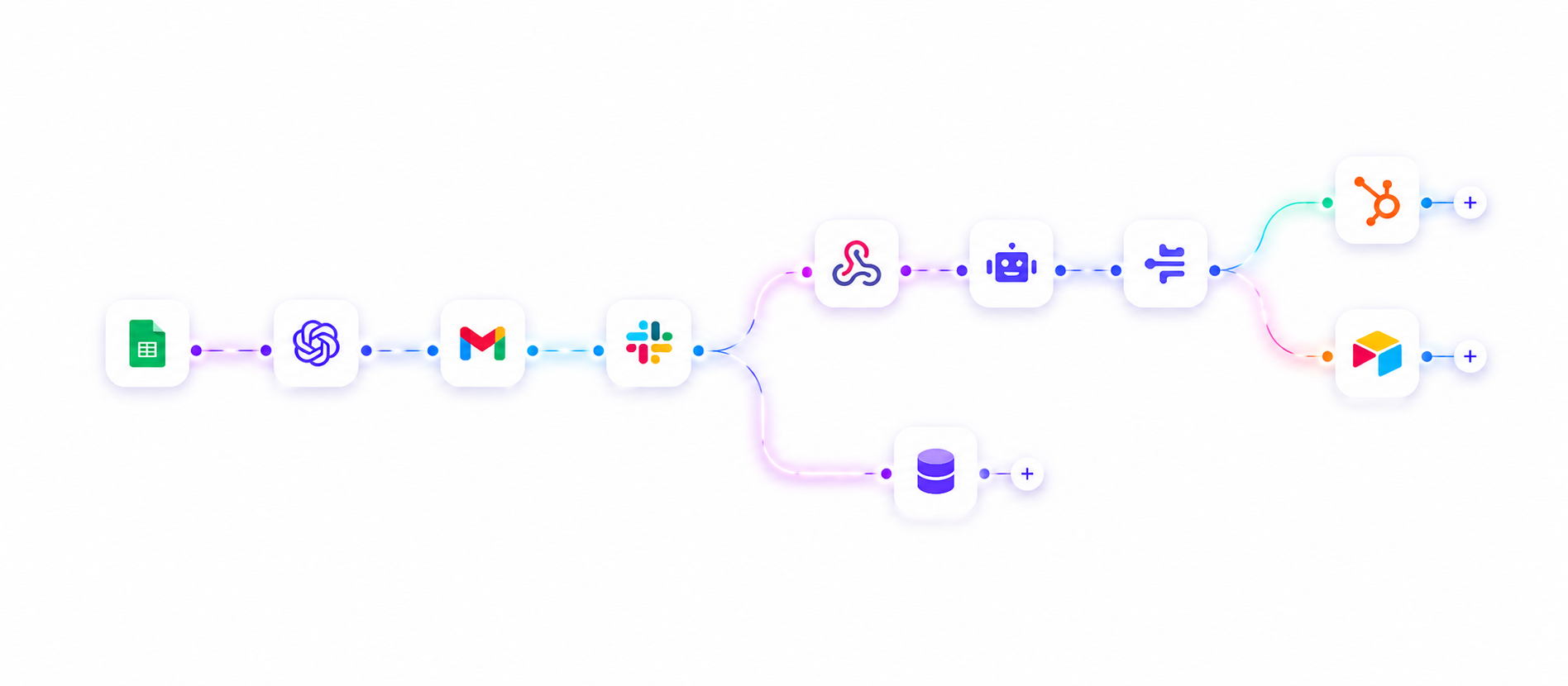
Illustration of an automated workflow connecting multiple business applications.
Designing in the Age of AI

Innovation Through Design

Innovation is not just about adopting new technologies. It's about finding better ways to solve problems, improve experiences, and create value.

Modern design tools and AI-powered workflows have dramatically changed how ideas can be explored, tested, and refined. Tasks that once required weeks of work can now be validated in days or even hours, allowing teams to focus more on learning and decision-making rather than lengthy production cycles.

While technology continues to evolve, the fundamentals of good design remain the same. Success still depends on understanding users, identifying the right problems, and creating solutions that support business goals.

I see innovation as a combination of curiosity, systems thinking, and continuous improvement. By embracing new tools while staying focused on outcomes, it becomes possible to move faster, reduce complexity, and create products that deliver meaningful value for both users and businesses.
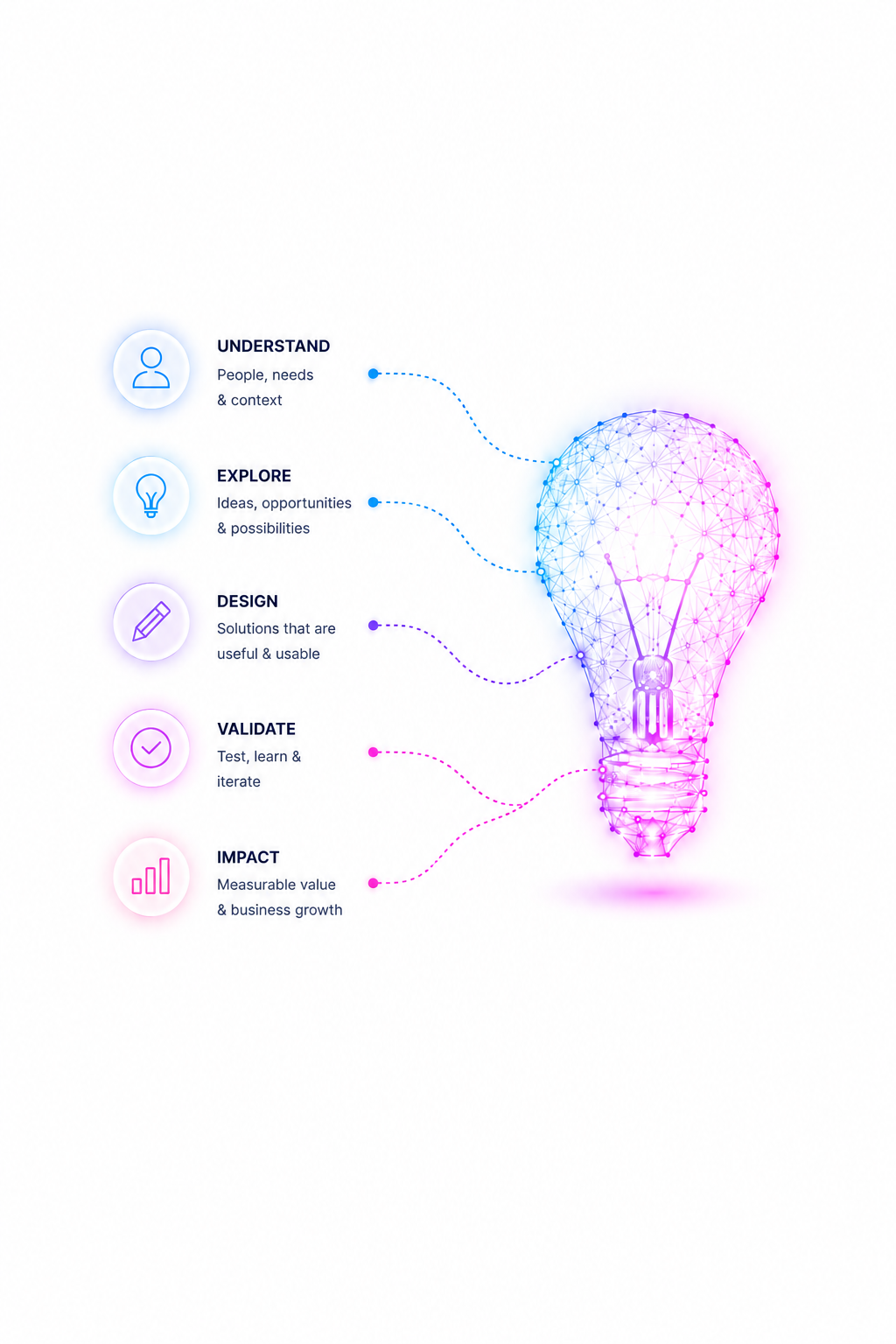
Illustration representing innovation through the design thinking process.

Business-Driven Design

For me, design is about more than creating attractive interfaces. The best solutions balance user needs, business goals, and technical realities.

I approach every project by understanding the bigger picture first. By looking at workflows, processes, and user behavior as a connected system, it's possible to identify opportunities that might otherwise go unnoticed.

Good design should reduce complexity, improve usability, and support measurable business outcomes. When user needs and business objectives are aligned, the result is a product that feels intuitive, efficient, and valuable for everyone involved.
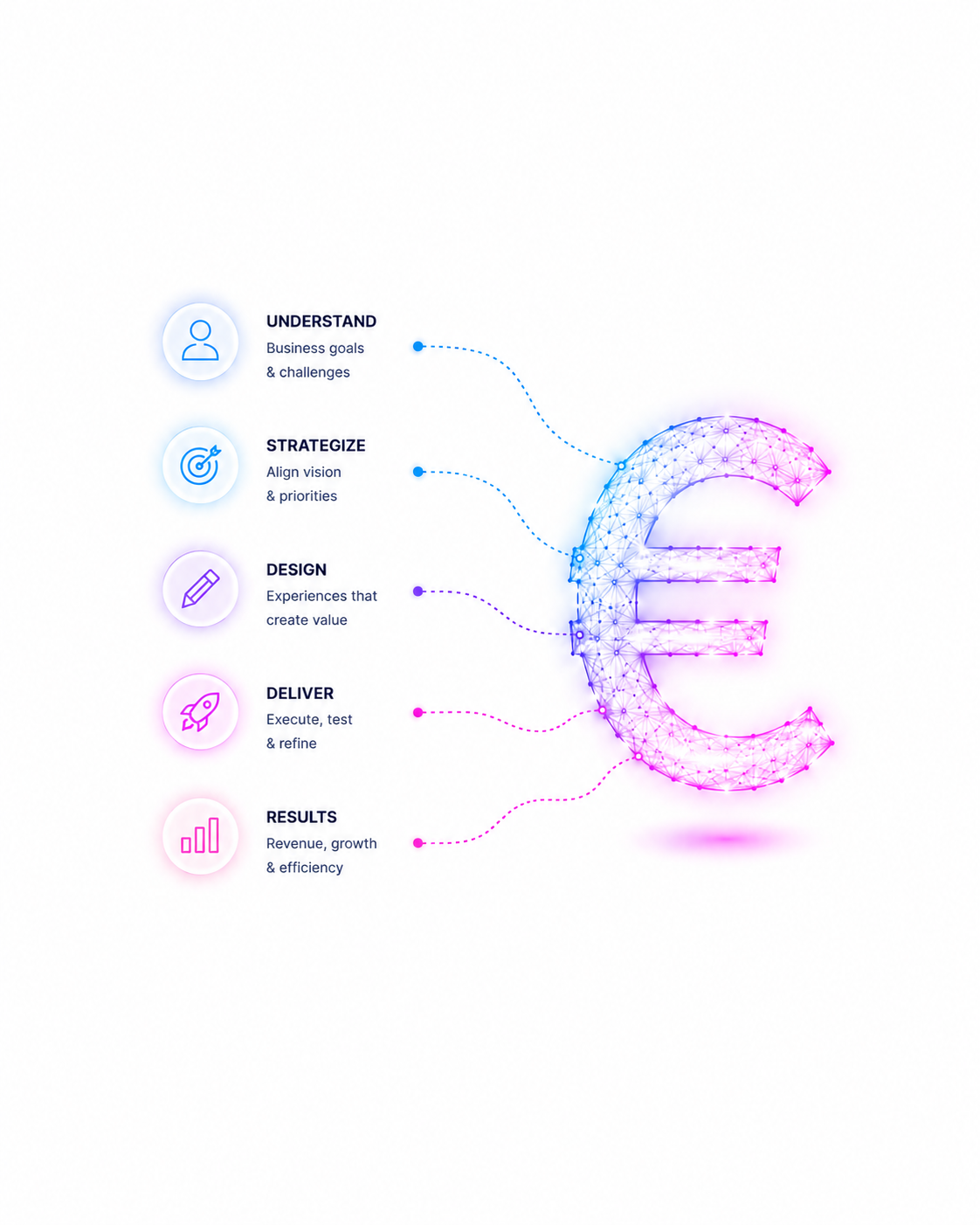
Illustration representing business-driven design and measurable business value.

Let`s build something together.

Whether you have a project, an idea, or a new opportunity, I'd love to hear from you.